About I Am Taxi Driver

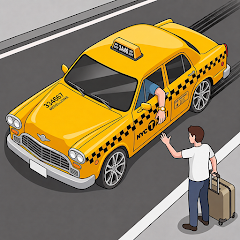
The I Am Taxi Driver app drops you into a city where the driving is automated but the passengers are not. You are not controlling the steering wheel. You are managing the chaos that unfolds in the back seat while the autopilot handles the road. The game is a role-playing simulation where every fare becomes a mini-sandbox mission. Passengers chat, argue, or cause trouble, and your job is to keep the ride moving while dealing with whatever they throw at you. This is not a traditional driving simulator. It is a passenger management game disguised as a taxi game.
The app is developed by Estoty SIA, a game studio based in Latvia with over 1.5 billion downloads across its titles. Estoty has a track record of producing casual and hyper-casual games that often lean into absurdist humor and chaotic gameplay. I Am Taxi Driver fits that pattern perfectly. The game is free to download, with in-app purchases available. It is available on both Android and iOS, with the Android version requiring version 7.0 or higher. The app is rated Teen for mild violence, which is appropriate given the occasional passenger antics.
The game's core loop is simple: pick up a passenger, let the autopilot drive, and interact with the passenger through dialogue options or actions. The passenger might ask for a song, complain about the fare, or start a fight. The player's choices affect the outcome of the ride, including the tip and the passenger's rating. The open-world city provides a backdrop for these interactions, with day and night cycles adding variety. The game also includes upgrade mechanics, allowing players to unlock and customize their taxi with new paint jobs, decals, and performance parts.
What happens when you open the app for the first time
The onboarding is minimal. The app launches directly into the game world with a brief tutorial that explains the basic controls. The tutorial is not intrusive; it simply highlights the key buttons and prompts the player to pick up their first passenger. The interface is clean, with a speedometer, a passenger count, and a dialogue wheel that appears when a passenger starts talking. The autopilot takes over driving immediately, so the player never has to worry about steering or traffic. This is a deliberate design choice that shifts the focus from driving to interaction.
The first few rides are straightforward. The passenger makes small talk, and the player selects responses from a list of options. The responses can be polite, sarcastic, or aggressive, and each choice changes the passenger's mood. A happy passenger gives a better tip. An angry passenger might try to leave without paying. The game also introduces random events, such as a bird pooping on the windshield, which requires the player to clean it off using a button prompt. These events are designed to break the monotony and add a layer of unpredictability.
The open-world city is detailed but not overly large. It includes recognizable landmarks, traffic lights, and other vehicles that react to the player's taxi. The day and night cycle is smooth, with streetlights turning on at dusk and traffic patterns changing. The game runs well on most devices, though some users have reported lag and performance issues, particularly on older hardware. The app's file size is substantial, typically around 500 MB, which is a consideration for users with limited storage.
How autopilot and passenger chaos work together
The game's central mechanic is the interplay between the autopilot driving system and the chaotic passenger events. The autopilot is not just a convenience feature; it is the core of the gameplay. By removing the need to steer, the game allows the player to focus entirely on the passenger interaction. This creates a unique rhythm: the player watches the road passively while actively managing the passenger's mood and responding to random events. The autopilot also introduces its own quirks, such as occasionally taking a wrong turn or driving erratically, which can trigger additional passenger reactions.
This design choice is not explicitly described on the Play Store page, but it is the defining feature of the game. It transforms what could be a mundane driving simulator into a reactive storytelling experience. The passenger is not just a destination; they are the source of the game's drama. The dialogue options are limited but varied enough to create different outcomes. For example, a passenger who asks for a song might react positively to a specific genre, while another passenger might get annoyed by the same choice. These small decisions add replayability, as players can experiment with different approaches to see how passengers react.
However, this mechanic also creates a tension. The game's monetization model relies heavily on ads, which interrupt the flow of the gameplay. After each ride, an ad often plays, and there are also interstitials between missions. This can break the immersion and frustrate players, especially when they are in the middle of a tense interaction. The game also includes optional in-app purchases that remove ads, but these are not heavily promoted. The result is a game that is fun when it works, but the ad frequency can make it feel like a chore.
The game's upgrade system adds another layer to the autopilot-passenger dynamic. Upgrading the taxi can improve its speed, handling, and appearance, but it does not change the core interaction loop. The upgrades are mostly cosmetic or performance-based, which is a missed opportunity. A more interesting upgrade system might have included new passenger types or dialogue options, which would have added more variety to the interactions. As it stands, the upgrades are a superficial addition that does not significantly alter the gameplay.
Real-world performance and user experience
The app's performance is a mixed bag. On modern devices, the game runs smoothly, with minimal lag and fast loading times. The graphics are colorful and stylized, with a cartoonish aesthetic that suits the game's tone. The sound design is adequate, with a jazzy soundtrack that fits the city atmosphere. However, the game's reliance on ads is a significant drawback. Users on multiple platforms have complained about the frequency and intrusiveness of the ads. One reviewer on FoxData described the ads as "insane," while another on TapTap called the game "trash" because of them. The ads are not just annoying; they can also cause the game to crash, according to some reports.
The game's data privacy practices have also raised concerns. According to a report from Counterspy, the app carries seven third-party trackers and collects a significant amount of user data. The app's own data safety section on Google Play states that it may share app activity, app info, and device ID with third parties. Data is encrypted in transit, but the number of trackers is still a red flag for privacy-conscious users. The app does not appear to collect location data or personal information, but the tracking is still extensive.
The game's user interface is functional but not particularly polished. The dialogue wheel is easy to use, and the buttons are responsive. However, the menu system is clunky, and navigating between the garage, the city map, and the settings can be confusing. The game also lacks a dark mode, which is a notable omission for a game that is often played at night. The reading interface for dialogue is basic, with text appearing in a small box at the bottom of the screen. This is functional but not optimal for long conversations.
The game's community is small but active. The game has over 22,000 ratings on Android with an average of 4.64, which is relatively high despite the complaints about ads. The iOS version has a 4.7 rating from 1,600 reviews. The positive ratings suggest that many players enjoy the game despite its flaws. The developer, Estoty, has a history of updating its games frequently, and the changelog for the latest version includes new features like taxi customization and food effects. This indicates that the developer is actively maintaining the game and responding to player feedback.
The game's replay value is moderate. The core loop is fun for a few sessions, but it can become repetitive after a while. The random events and passenger interactions add variety, but the lack of a long-term goal or progression system limits the game's longevity. The upgrade system is shallow, and there is no narrative arc to keep players engaged. The game is best enjoyed in short bursts, which is consistent with its casual game design.
The game's support for multiple platforms is a positive feature. The iOS version is almost identical to the Android version, with the same features and performance. The game can also be played on PC via emulators like BlueStacks and LDPlayer, which expands its accessibility. The game's cross-platform availability is a strength, as it allows players to switch between devices without losing progress.
The game's monetization model is a double-edged sword. On one hand, the game is free, which lowers the barrier to entry. On the other hand, the ads are intrusive enough to drive some players away. The in-app purchases are reasonably priced, but they are not well-integrated into the gameplay. A better approach might have been to offer a premium version with no ads, which would have given players a choice. As it stands, the game's ad frequency is a significant pain point that the developer needs to address.
The game's use of autopilot is a clever design choice that sets it apart from other driving games. It allows the developer to focus on the passenger interactions, which are the game's unique selling point. However, the autopilot also means that the player has less control over the driving experience, which might disappoint players who are looking for a traditional driving simulator. The game is marketed as a taxi driving simulation, but it is really a passenger management game. This mismatch between marketing and gameplay could lead to disappointment for some players.
The game's random events, such as birds pooping on the windshield, add a layer of unpredictability that keeps the gameplay fresh. These events are not overly frequent, but they are frequent enough to prevent the game from becoming monotonous. The events are also tied to the passenger interactions, as a passenger might react to the event in a specific way. This integration of random events and passenger interactions is one of the game's strengths.
The game's upgrade system is functional but underwhelming. The upgrades are mostly cosmetic, such as new paint jobs and decals, which do not affect the gameplay. There are also performance upgrades, such as faster acceleration and better handling, but these are not noticeable in the autopilot-driven gameplay. A more meaningful upgrade system might have included new passenger types, new dialogue options, or new random events. This would have added more depth to the game and given players a reason to keep playing.
The game's lack of a dark mode is a minor but noticeable omission. Dark mode is a standard feature in many modern apps, and it is particularly useful for games that are played at night. The game's bright color scheme can be harsh on the eyes in low-light conditions. The developer could easily add a dark mode option in a future update, and it would be a welcome addition.
The game's dialogue system is simple but effective. The dialogue options are limited to three or four choices, and the passenger's reactions are predictable based on the player's choice. However, the dialogue is well-written, with a humorous tone that fits the game's chaotic theme. The dialogue also varies depending on the passenger type, with different passengers having different personalities and preferences. This adds a layer of depth to the interactions and makes each ride feel unique.
The game's city environment is well-designed, with a variety of landmarks and traffic patterns. The city is not overly large, but it is large enough to provide a sense of exploration. The day and night cycle is smooth, with realistic lighting changes. The traffic is also realistic, with cars stopping at red lights and pedestrians crossing the street. The environment is a key part of the game's immersion, and it is well-executed.
The game's sound design is adequate but not exceptional. The soundtrack is a jazzy, upbeat tune that fits the city atmosphere. The sound effects are basic, with engine noises, honking horns, and passenger chatter. The voice acting is limited, with most dialogue being text-based. The sound design is functional, but it does not add much to the overall experience.
The game's loading times are reasonable, with the game loading in a few seconds on most devices. The loading screens are not intrusive, and they are accompanied by tips or trivia about the game. The game also saves progress automatically, which is a convenient feature. The game's performance is generally stable, with occasional crashes reported by some users. The crashes are likely related to the ads, as they often occur when an ad is loading.
The game's community features are limited. There is no in-game chat or leaderboard, which is a missed opportunity. A leaderboard would have added a competitive element to the game and given players a reason to keep playing. The game's social features are limited to sharing achievements on social media, which is a basic feature that does not add much value.
The game's future updates are likely to focus on new content and bug fixes. The developer has a history of updating its games regularly, and the latest changelog includes new features like taxi customization and food effects. This suggests that the developer is committed to improving the game and responding to player feedback. The game's potential for growth is significant, as it could eventually become a more polished and feature-rich experience.
The game's ad frequency is the most significant issue that the developer needs to address. The ads are not just annoying; they also disrupt the gameplay and can cause crashes. The developer could reduce the ad frequency or offer a premium ad-free version. The in-app purchases are reasonably priced, but they are not well-integrated into the gameplay. A better approach might have been to offer a subscription model that removes ads and provides additional content.
The game's data privacy practices are another concern. The app carries seven third-party trackers, which is excessive for a casual game. The app's data safety section on Google Play states that it may share app activity, app info, and device ID with third parties. Data is encrypted in transit, but the number of trackers is still a red flag for privacy-conscious users. The developer should consider reducing the number of trackers and providing more transparency about data collection.
The game's core loop is fun and addictive, but it lacks depth. The passenger interactions are the game's strongest feature, but they are limited in scope. The game could benefit from more varied passenger types, more dialogue options, and more random events. The upgrade system is also shallow and could be improved. The game's potential for growth is significant, and the developer has a solid foundation to build upon.
The game's autopilot mechanic is a clever design choice that sets it apart from other driving games. It allows the player to focus on the passenger interactions, which are the game's unique selling point. However, the autopilot also means that the player has less control over the driving experience, which might disappoint players who are looking for a traditional driving simulator. The game is marketed as a taxi driving simulation, but it is really a passenger management game. This mismatch between marketing and gameplay could lead to disappointment for some players.
The game's random events, such as birds pooping on the windshield, add a layer of unpredictability that keeps the gameplay fresh. These events are not overly frequent, but they are frequent enough to prevent the game from becoming monotonous. The events are also tied to the passenger interactions, as a passenger might react to the event in a specific way. This integration of random events and passenger interactions is one of the game's strengths.
The game's upgrade system is functional but underwhelming. The upgrades are mostly cosmetic, such as new paint jobs and decals, which do not affect the gameplay. There are also performance upgrades, such as faster acceleration and better handling, but these are not noticeable in the autopilot-driven gameplay. A more meaningful upgrade system might have included new passenger types, new dialogue options, or new random events. This would have added more depth to the game and given players a reason to keep playing.
The game's lack of a dark mode is a minor but noticeable omission. Dark mode is a standard feature in many modern apps, and it is particularly useful for games that are played at night. The game's bright color scheme can be harsh on the eyes in low-light conditions. The developer could easily add a dark mode option in a future update, and it would be a welcome addition.
The game's dialogue system is simple but effective. The dialogue options are limited to three or four choices, and the passenger's reactions are predictable based on the player's choice. However, the dialogue is well-written, with a humorous tone that fits the game's chaotic theme. The dialogue also varies depending on the passenger type, with different passengers having different personalities and preferences. This adds a layer of depth to the interactions and makes each ride feel unique.
The game's city environment is well-designed, with a variety of landmarks and traffic patterns. The city is not overly large, but it is large enough to provide a sense of exploration. The day and night cycle is smooth, with realistic lighting changes. The traffic is also realistic, with cars stopping at red lights and pedestrians crossing the street. The environment is a key part of the game's immersion, and it is well-executed.
The game's sound design is adequate but not exceptional. The soundtrack is a jazzy, upbeat tune that fits the city atmosphere. The sound effects are basic, with engine noises, honking horns, and passenger chatter. The voice acting is limited, with most dialogue being text-based. The sound design is functional, but it does not add much to the overall experience.
The game's loading times are reasonable, with the game loading in a few seconds on most devices. The loading screens are not intrusive, and they are accompanied by tips or trivia about the game. The game also saves progress automatically, which is a convenient feature. The game's performance is generally stable, with occasional crashes reported by some users. The crashes are likely related to the ads, as they often occur when an ad is loading.
The game's community features are limited. There is no in-game chat or leaderboard, which is a missed opportunity. A leaderboard would have added a competitive element to the game and given players a reason to keep playing. The game's social features are limited to sharing achievements on social media, which is a basic feature that does not add much value.
The game's future updates are likely to focus on new content and bug fixes. The developer has a history of updating its games regularly, and the latest changelog includes new features like taxi customization and food effects. This suggests that the developer is committed to improving the game and responding to player feedback. The game's potential for growth is significant, as it could eventually become a more polished and feature-rich experience.
The game's ad frequency is the most significant issue that the developer needs to address. The ads are not just annoying; they also disrupt the gameplay and can cause crashes. The developer could reduce the ad frequency or offer a premium ad-free version. The in-app purchases are reasonably priced, but they are not well-integrated into the gameplay. A better approach might have been to offer a subscription model that removes ads and provides additional content.
The game's data privacy practices are another concern. The app carries seven third-party trackers, which is excessive for a casual game. The app's data safety section on Google Play states that it may share app activity, app info, and device ID with third parties. Data is encrypted in transit, but the number of trackers is still a red flag for privacy-conscious users. The developer should consider reducing the number of trackers and providing more transparency about data collection.
The game's core loop is fun and addictive, but it lacks depth. The passenger interactions are the game's strongest feature, but they are limited in scope. The game could benefit from more varied passenger types, more dialogue options, and more random events. The upgrade system is also shallow and could be improved. The game's potential for growth is significant, and the developer has a solid foundation to build upon.
Screenshots


Get File
App Specifications
| Latest Version | 1.3.7 |
| Uploaded by | Estoty |
| Requires Android | Varies with device |
| Category | Role Playing |
| Content Rating | Rated for 12+ |
Technical Details
| Package Name | com.NewFolderGames.TaxiDriver |
| Languages | English |
| Architecture | arm64-v8a |
| Signature | 3d2437682f9980da825240ba92680ddff0883abddebf86d790b8a2c46598e19d |
Security & Additional Info
| Scan Result | Secure |
| Package Name | com.NewFolderGames.TaxiDriver |
| SHA‑256 | 3d2437682f9980da825240ba92680ddff0883abddebf86d790b8a2c46598e19d |
| SHA‑1 | a02ea0fa75c89a04bfb4f36daa08a4de1bae2c28 |
| App Permissions | 0 |