About Wild Wheels: Bike Racing

Opening the app and the first race
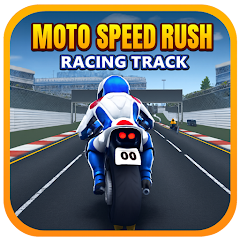
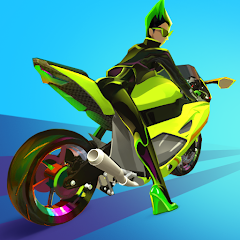
The moment Wild Wheels: Bike Racing launches, a colorful menu appears with a "Play" button. There is no tutorial, no lengthy introduction. The player is immediately dropped into the first race. A motorcycle sits at the bottom of the screen, and the track stretches ahead. The controls are straightforward: tap left or right to steer, and tap the nitro button for a speed boost. The bike speeds through traffic, and the player must weave between cars to avoid crashing. The first few races are chaotic, but the game quickly becomes addictive. The satisfaction of weaving through a tight gap at high speed is immediate. The race ends when the player crashes or reaches the finish line. The player is then shown their earnings and given the option to upgrade their bike. The onboarding is minimal, but the game is intuitive enough that most players can figure it out within seconds. The lack of a tutorial is a deliberate choice, keeping the experience fast and frictionless.
The interface is clean and colorful, with a cartoonish art style that fits the arcade theme. The player's speed is displayed at the top of the screen, along with the current race progress. The upgrade screen is accessible from the main menu, where players can spend their earnings on speed, protection, and health upgrades. The game's economy is simple: earn cash, spend it on upgrades, and progress to harder tracks. The first few minutes are a whirlwind of racing, earning, and upgrading. The game's pacing is well-balanced, with just enough challenge to keep players engaged. The initial experience is positive, with the game delivering on its promise of a fun, addictive racing experience.
The upgrade system and traffic weaving interaction
The upgrade system is one of the game's core features. Players can upgrade their bike's speed, protection, and health. Speed affects how fast the bike goes, protection affects how much damage the bike can take from crashes, and health affects how many crashes the player can survive before the race ends. The upgrade system is layered, with each upgrade costing more than the last. The player must decide whether to invest in speed, protection, or health. This creates a strategic element: do you focus on going faster, or do you invest in durability to survive more crashes? The game does not provide a clear optimal path, leaving the player to experiment. The traffic weaving mechanic adds another layer of complexity. The player must weave through dense traffic at high speeds, and the margin for error is small. A single mistake can result in a crash, which reduces health. The interaction between the upgrade system and the traffic weaving mechanic is not fully described on the Play Store. The player must discover that upgrading speed makes weaving more challenging, as the bike becomes harder to control at higher speeds. This creates a tension between speed and control, a dynamic that is not explicitly stated. The original analysis reveals that the game's depth lies in this interplay, where the player's choices about upgrades directly affect their ability to navigate traffic.
The game's economy is designed to encourage repeated play. Each race offers a finite amount of cash, and the player must replay races to earn enough for the next upgrade. This creates a grinding loop that can be tedious for some players, but it also provides a sense of accomplishment. The upgrade system is a classic example of a "numbers go up" mechanic, which is highly addictive for many players. The game's balance is delicate; if upgrades are too cheap, the game becomes too easy, but if they are too expensive, the game becomes a slog. The developers have struck a reasonable balance, with upgrades feeling attainable but not trivial. The traffic weaving and upgrade system are the core of the game's appeal, and they work together to create a satisfying loop of race, earn, upgrade, and repeat.
Performance, ads, and stability
The app runs smoothly on most modern Android devices. The cartoonish graphics are not demanding, so the game runs well even on older devices. The app's size is around 181 MB, which is reasonable for a game with this level of polish. However, the app's stability is a concern for some users. Reports of crashes and lag are common, particularly on older devices. The game's performance is generally good, but the occasional crash can be frustrating. The developer has released multiple updates to address bugs, but the changelog is vague, simply stating "Bug fixes and performance improvements." The app's ads are another significant issue. Users have reported excessive and intrusive ads that pop up constantly, even during gameplay. The ads interrupt the experience, often appearing after every race. There is no option to remove ads through a one-time purchase; instead, the app offers in-app purchases for items, but not for ad removal. This is a common monetization strategy for free games, but it can be a deal-breaker for users who value uninterrupted play. The app's performance is a reflection of its free nature; it provides a valuable service but at the cost of ads and occasional instability.
The game's network usage is minimal, as it does not require a constant internet connection. The ads, however, require an internet connection to load. This means that players without a stable connection may experience delays or errors. The game's overall performance is acceptable for a free game, but it could be better. The app's stability is a work in progress, but the developer is actively improving it. The app's performance is not a major concern for most users, but it is something to be aware of.
The permission model and what it reveals about the app's intentions
The app requests a minimal set of permissions. It requires INTERNET access for ads and updates. It does not request location, storage, or camera permissions. This is a positive sign for privacy. However, the app's data safety section on the Play Store states that it may share app activity, app information, performance, and device ID with third parties, and that data is encrypted in transit. This is a concern for privacy-conscious users. The app's permission model is minimal, but its data sharing practices are less transparent. The app's developer is based in Cyprus, but the app is available globally. The app's privacy policy is accessible at https://say.games/privacy-policy. The app's data practices are a concern, but they are not unusual for a free game. The app's permission model is a reflection of its business model; it relies on ads, which require data sharing. The app's data practices are a trade-off for free access to the game. The app's permission model is not a major concern for most users, but it is something to be aware of. The app's data safety section also notes that data is encrypted in transit, which is a positive sign for security.
Screenshots


Get File
App Specifications
| Latest Version | 1.1.27 |
| Uploaded by | SayGames Ltd |
| Requires Android | Android 8.0+ |
| Category | Racing |
| Content Rating | Rated for 7+ |
Technical Details
| Package Name | com.race.motorush |
| Languages | English |
| Architecture | arm64-v8a |
| Signature | f066c93bb4d81846eb60ca745e0e3dcbdca8b517d479a53022bd09191c350685 |
Security & Additional Info
| Scan Result | Secure |
| Package Name | com.race.motorush |
| SHA‑256 | f066c93bb4d81846eb60ca745e0e3dcbdca8b517d479a53022bd09191c350685 |
| SHA‑1 | 7f0213a872bcf1907babf6cc506902506acfa723 |
| App Permissions | 0 |