About Royal Flames of Destiny

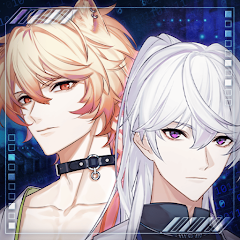
The first thing that happens after launching the game is a title screen with three shadowy figures: a vampire, a werewolf, and a dragon. The art style is typical of mobile visual novels—detailed character portraits against a fantasy backdrop. Tapping the screen leads to a brief prologue. The player character, a human, is accused of a crime they did not commit. They are about to be executed when the three supernatural kings intervene. They reveal that the player holds the key to an ancient prophecy. This is the premise, delivered in a few screens of text. There is no voice acting, no animation, just text and character portraits that change expression based on the dialogue. The game then presents the first choice: which king to trust. This is the core loop: read, choose, read more.
The choice system is straightforward. Each decision point offers two to three options. Some choices affect the story immediately, while others influence the player's relationship with the kings. The game tracks these relationships, though the exact mechanics are not visible to the player. There is no stat screen, no affection meter. The player must infer their standing from the dialogue. This creates a sense of mystery but also makes it difficult to strategize. A player who wants to romance the vampire king must guess which choices align with his personality. The game does not provide hints or feedback, which can lead to frustration. A wrong choice might lock the player out of a romance route entirely, forcing a restart.
When choices and premium options collide
The game offers premium choices that cost in-game currency or real money. These choices unlock additional scenes, deeper romantic moments, and sometimes entire subplots. The premium options are clearly marked, usually with a golden border or a lock icon. This creates a two-tiered experience: free players get the basic story, while paying players get the "full" experience. The clash occurs when a free player encounters a premium choice that significantly alters the story. The game presents the choice as available but locked, reminding the player that they are missing out. This can break immersion. The player is pulled out of the fantasy and reminded of the monetization model. The game does not offer a way to earn premium currency through gameplay, which means free players are permanently locked out of certain content.
The premium choices also affect the relationship system. Some romantic scenes are only available through premium choices. This means a free player might pursue a romance route but never reach the "good" ending because the key romantic moments are behind a paywall. The game does not communicate this clearly. A player might invest hours in a route only to discover that the happy ending requires a purchase. This is a common frustration in interactive fiction, but the game does not mitigate it with clear warnings or alternative paths.
The ad load and what it costs
The game is free, and it monetizes through ads and in-app purchases. Ads appear between chapters, often as full-screen video ads that last 15 to 30 seconds. The frequency is moderate—roughly one ad per chapter. This is less aggressive than some games, but it still interrupts the narrative flow. The ads are for other games, often from the same developer. The game does not offer a way to remove ads through a one-time purchase; instead, players must buy premium currency, which does not remove ads. This is a missed opportunity. A player who enjoys the game and wants an uninterrupted experience has no option to pay for that privilege.
Performance is generally smooth. The game is text-heavy, so it does not tax the device's hardware. However, the ad transitions can cause brief stutters. The game loads ads from the network, which means an internet connection is required. This contradicts the idea of a "story" that can be enjoyed anywhere. A player on a commute or in a area with poor connectivity will face delays as the game waits for ads to load.
The permission that matters most
The app requests storage access, which is necessary for saving game data. It also requests network access, which is required for ads and in-app purchases. The app does not request any other permissions, which is a positive point. The storage permission is broad, but it is standard for games that save progress. The app's privacy policy states that data is encrypted in transit and that data cannot be deleted, according to the Play Store's data safety section. The developer is based in Japan, which has strict data protection laws, but the app is used globally, and users may not be aware of how their data is being used.
Screenshots


Get File
App Specifications
| Latest Version | 3.0.0 |
| Uploaded by | Interactive Studio Inc. |
| Requires Android | Android 7.0+ |
| Category | Simulation |
| Content Rating | Rated for 12+ |
Technical Details
| Package Name | jp.interactive_studio.threekings |
| Languages | English |
| Architecture | arm64-v8a |
| Signature | 546449a03b669890fb3ee9b303e2cc673e592ac6ead023c03dc6230545bdf417 |
Security & Additional Info
| Scan Result | Secure |
| Package Name | jp.interactive_studio.threekings |
| SHA‑256 | 546449a03b669890fb3ee9b303e2cc673e592ac6ead023c03dc6230545bdf417 |
| SHA‑1 | a1f241b6a6b67a4ee4deb7d7a46159dcb69f49e4 |
| App Permissions | 0 |