About School Party Craft

What happens when you first open the game
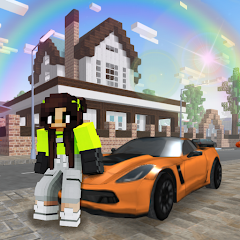
The loading screen shows a city skyline made of blocks. You pick a character from a small grid of options — a boy or a girl with basic outfits. No tutorial pops up. No hand-holding. You are dropped straight into a plaza with other characters walking around. The camera sits behind your character in third-person view. A joystick on the left controls movement. Buttons on the right handle actions: jump, interact, and a weapon toggle. The first thing most players do is walk toward the nearest building. The game runs on devices with at least 1GB of RAM, which covers most budget phones. The frame rate stays steady on older hardware, though the visual quality drops noticeably on low-end devices. The city feels alive but empty at the same time. Characters wander around, but they do not react to you unless you initiate contact. You can tap on anyone to start a conversation. A speech bubble appears with preset phrases. The response is always generic. "Hi." "Hello." "Nice day." That is the extent of the dialogue. The game does not explain where to go or what to do. You figure it out by walking around and tapping on things. This is the onboarding reality: no direction, no quest log, just a blocky city and a lot of free time.
The absence of a structured start is intentional. The developer, Candy Room Games & RabbitCo, builds games that rely on player curiosity. School Party Craft is not a linear experience. You buy a house, you decorate it, you drive cars, you shoot paintball guns. The order is yours. But that freedom comes with a cost. New players often feel lost. They walk into the market, see hundreds of furniture items, and have no idea how to place them. The build menu is hidden behind a small hammer icon in the corner. Once you find it, the block placement system uses a grid snap. You select a block, tap the ground, and it appears. It works, but the precision is rough. Placing a door next to a wall requires multiple attempts. The game does not highlight the snap points. You guess until it looks right. This friction is the first reality check. The game is free, and it feels free. The ads start within the first two minutes. A banner at the bottom of the screen. A video ad after you enter a building. A pop-up when you open a chest. The frequency increases as you play. By the tenth minute, you see an ad roughly every thirty seconds. This is the trade-off. No upfront cost, but your time becomes the currency.
How the build system and paintball mode work together
The building system and the paintball combat are the two pillars of School Party Craft. They interact in a way that is not obvious at first. You can place blocks anywhere in the city. That includes the paintball arena. Players who figure this out build walls, ramps, and bunkers before a match starts. The blocks are destructible. Paintball rounds do not destroy them, but other players can remove them if they have building permissions. The game does not restrict building in combat zones. This creates a dynamic where a player can spend ten minutes constructing a fort, only to have an opponent walk over and delete a single block, collapsing the entire structure. The building system uses a simple grid. Each block is one cubic meter. You cannot place blocks diagonally. Every structure is orthogonal. This limits the complexity of your defenses. A straight wall is easy. A curved bunker is impossible. The paintball weapons include a minigun, a pistol, an assault rifle, a dinosaur gun, and a shark bazooka. Each weapon fires colored paint pellets. The dinosaur gun shoots a burst of three pellets in a spread pattern. The shark bazooka fires a single large projectile that splashes paint over a small area. None of these weapons destroy blocks. They only mark players. A hit removes a portion of your health bar. Three hits and you are out. The respawn timer is five seconds. You reappear at a random spawn point near the arena. The combination of building and shooting creates a strategy layer that is not documented anywhere. Players who build elevated platforms gain a sight advantage. Players who build tight corridors force close-range fights. The game does not explain any of this. You learn by dying. A lot.
The original analysis here is the tension between the building grid's precision and the paintball combat's speed. The grid snap requires careful placement. A single misaligned block leaves a gap. That gap becomes a shooting lane for opponents. Experienced players place blocks in a staggered pattern to create cover without gaps. The game does not have a blueprint or copy-paste feature. Every structure is built block by block. This makes pre-fight preparation slow. A player who spends five minutes building a bunker has five minutes less to practice aim or explore the map. The trade-off is real. The most effective strategy is not a solid wall but a series of partial walls with gaps at different heights. This forces opponents to adjust their aim vertically. The game's physics do not simulate bullet drop, so elevation is the only variable. The shark bazooka's splash damage ignores cover to some extent. A well-placed shot behind a wall can still tag a player. This counter-play keeps the mode from becoming a building-only stalemate. The paintball mode is not the main attraction, but it is the most replayable part of the game. The building system exists for the life simulation side, yet it finds its most practical use in combat.
The real cost of free: ads, performance, and updates
The ad load in School Party Craft is higher than in most free-to-play games. Every action that triggers a loading screen also triggers an ad. Entering a building, opening a chest, starting a paintball match, and even changing outfits all prompt a video ad. The ads are not skippable for the first five seconds. Some run for thirty seconds. The reward for watching is nothing. These are not optional rewarded ads. They are forced interruptions. The developer's revenue model relies entirely on ad impressions. AppGoblin estimates the app generates over $500,000 in monthly revenue from ads alone. There are no in-app purchases. This explains the frequency. Every ad viewed pays a fraction of a cent. To reach that revenue, the app must show millions of ads per day. The player experiences this as a constant disruption. The game's performance on low-end devices is acceptable, but the ads cause stutter. When an ad loads, the frame rate drops. The transition back to the game sometimes takes an extra second. On devices with 1GB of RAM, this can cause a brief freeze. The game itself runs smoothly between ads. The weather system changes from sunny to rainy to night. The character animations are basic but functional. The driving controls are the weakest part of the experience. Steering a car uses the same joystick as walking. The car accelerates automatically. Braking is not an option. You stop by releasing the joystick. Turning feels loose. The car drifts without input. This makes driving frustrating, especially in tight city streets. The motorcycle handles better. It turns sharper and stops faster. The bicycle is the most responsive vehicle. It also looks ridiculous next to the sports cars. Players who want to get around quickly use the motorcycle. Players who want to show off use the cars. The game adds new vehicles in updates. The most recent update added a helicopter. It flies above the city and ignores traffic. The controls are even looser than the cars.
The update cycle is active. The developer pushes new content every few weeks. The Season 1 update added palm trees, a robot character, a Navi character, an Albino Cyborg Gorilla, and generic robots. The changelog does not mention bug fixes. It only lists new content. This pattern repeats across versions. New characters, new vehicles, new cosmetics. Performance improvements are rarely documented. The game's file size has grown from 30MB in 2021 to over 120MB in 2026. The increase comes from new assets, not engine optimizations. The game still targets Android 4.4 as the minimum version. This is a surprisingly low requirement for a game with 3D graphics and real-time interactions. The optimization trade-off is visible in the texture quality. Close up, the block textures are blurry. The character models are simple. The city has draw distance limits. Objects farther than fifty meters fade into a fog. These compromises keep the game running on old phones. The trade-off is visual fidelity. The game looks like a prototype from 2015. The target audience — schoolchildren and teenagers — does not seem to mind. The reviews praise the freedom and the variety of activities. The complaints focus on ads and the small map size. The map has not expanded in the last three updates. Players want more areas to explore. The developer responds to feedback but prioritizes new characters over new zones. The Albino Cyborg Gorilla is a strange addition. It does not fit the school theme. It walks around the city like any other NPC. Players can interact with it, but it only grunts. The gorilla is a novelty, not a meaningful addition.
The game's offline mode is its strongest technical feature. You do not need an internet connection to play. All the NPCs, buildings, and activities are stored locally. The ads still appear offline. They are cached from previous sessions. This means the game downloads ads in the background when you are online and shows them when you are offline. The offline mode works seamlessly. You can build houses, drive cars, and play mini-games without any network latency. The social features require an internet connection. You cannot send SMS messages to other players offline. The phone book feature is online-only. The game does not clarify this distinction. Players who try to message friends offline see a "no connection" error. The error message is generic. It does not explain that the feature requires Wi-Fi or cellular data. This confusion is common in user reviews. Players expect the phone book to work offline because the rest of the game does. The developer has not addressed this in any changelog. The game's permissions include WAKE_LOCK, FOREGROUND_SERVICE, ACCESS_WIFI_STATE, and ACCESS_NETWORK_STATE. These are standard for ad-supported games. The WAKE_LOCK permission keeps the screen on during ads. The FOREGROUND_SERVICE permission allows ads to play even when the app is in the background. This is unusual. Most games do not run foreground services for ads. The app's data safety section states that no data is collected and data is encrypted in transit. The privacy policy is vague. The developer is based in Cyprus, with operational presence in Ukraine. The app is available in over fifty countries, with the highest installs in Indonesia, India, and Brazil. The language options are limited. The game interface is available in English, Chinese, and a few other languages. Russian is not supported, despite the large player base in Eastern Europe. Russian users have complained about this on RuStore. The developer has not responded.
The game's content rating is Everyone 10+ with Fantasy Violence. The paintball guns look like real weapons. The minigun and assault rifle models are detailed. The paint pellets are colorful and explode on impact. There is no blood or gore. The violence is cartoonish. The aggressive NPCs with guns are the most controversial element. They spawn randomly and attack players on sight. The game calls them "rogues." Shooting them returns stolen coins. This mechanic encourages combat. It also introduces unprovoked aggression into a game marketed as a school party simulator. The disconnect between the theme and the gameplay is noticeable. The game is not a school simulator. It is a sandbox with school-themed cosmetics. The actual activities are driving, shooting, building, and socializing. The school is a single building with a classroom and a gym. The rest of the city is a generic urban environment. The game's title is misleading. The party is not at school. The party is everywhere. The game does not have a storyline or progression system. You earn coins by opening chests and completing mini-games. Coins buy furniture, blocks, and weapons. The economy is simple. You never run out of things to buy because the catalog is large. The furniture selection includes hundreds of items. The block types are numerous. The customization options are extensive. The character customization is limited to changing the entire character model. You cannot mix and match outfits. You select a preset character and that is it. The game has over fifty character presets, but you cannot customize individual clothing items. This is a common complaint. Players want more control over their avatar's appearance. The developer has not added a clothing editor. The game's version 1.8.39 is the latest as of July 2026. The update added palm trees, a robot character, a Navi character, an Albino Cyborg Gorilla, and robots. The changelog does not mention any bug fixes or performance improvements. The game still has the same control issues, the same ad frequency, and the same small map. The developer seems focused on content additions rather than quality-of-life improvements. The player base continues to grow despite these issues. The game has over 100 million installs. The rating remains high at 4.5 stars. The audience is young, patient, and forgiving. They want more content, not fewer ads. The developer delivers new content regularly. The ads are the price of entry.
The game's technical architecture is straightforward. It uses a Unity-based engine with block-style rendering. The camera supports first-person and third-person modes. The first-person mode is disorienting because the character model disappears. You see floating hands holding weapons. The third-person mode is the default and works better. The controls are customizable. You can reposition buttons on the screen. You can adjust the joystick sensitivity. The driving sensitivity is separate from the walking sensitivity. This is a thoughtful addition. The game settings include an advanced menu with gyroscope support and 120 FPS mode. The 120 FPS mode is only available on high-end devices. The game targets 30 FPS on low-end devices. The frame rate is capped at 60 FPS on mid-range phones. The optimization is adequate. The game does not overheat phones or drain batteries excessively. The network usage is minimal. The game only connects to the internet for ads and social features. The data usage is under 10MB per hour. The storage requirement is 120MB for the base game plus additional space for cached ads. The cached ads can take up to 200MB of storage. The game does not clear the cache automatically. Players must manually clear the app data to free up space. This is not documented anywhere. The game's support page is a single email address: [email protected]. The response time is unknown. The developer has not published a FAQ or a knowledge base. The community fills the gap. Players share tips on YouTube and social media. The content creators focus on gameplay walkthroughs and house tours. The most popular videos show off expensive mansions and rare vehicles. The game's social features are limited to in-game SMS and NPC interactions. There is no multiplayer matchmaking. The paintball mode is single-player against bots. The bots are predictable. They follow set paths and have basic aiming. The difficulty does not scale. Advanced players find the bots too easy. The game does not have a competitive mode or leaderboards. The replay value comes from building and exploring, not from combat or competition. The game's longevity depends on the player's creativity.
The game does not have a campaign or an ending. You play until you run out of things to build or explore. The city has a fixed number of buildings and lots. You can demolish houses and rebuild them. The land plots are limited. Once you have built on every plot, the creative options shrink. The only remaining activity is collecting coins and buying every item in the catalog. This takes dozens of hours. The coin economy is balanced. Chests spawn in random locations. Each chest contains between 10 and 100 coins. The respawn timer is three minutes. You can farm coins by running a loop around the city. The loop takes about two minutes. This creates a grinding loop that is monotonous but effective. The mini-games offer better coin rewards. The smile game is a reflex test. You tap a button when a smiley face appears. The restaurant mini-game is a serving simulator. You match orders to customers. The disco mini-game is a rhythm game. You tap arrows in time with the music. These mini-games break the monotony. They also force you to watch ads between rounds. The ad frequency is highest in the mini-games. Every round ends with a video ad. The ads are the game's primary monetization strategy. The developer has not added any paid options to remove ads. The ad-free experience does not exist. Even players who would pay to remove ads cannot do so. This is a design choice. The developer relies entirely on ad revenue. The monthly revenue estimate of $500,000 supports this model. The game has no subscription or one-time purchase. The app is free forever. The trade-off is clear. The game is technically competent but ad-heavy. The controls are serviceable but not polished. The content is abundant but repetitive. The game works offline but limits social features. The updates add new items but not new mechanics. The experience is what it is: a free sandbox with all the compromises that entails.
The permission set and what it actually does on your device
The game requests four permissions on Android: WAKE_LOCK, FOREGROUND_SERVICE, ACCESS_WIFI_STATE, and ACCESS_NETWORK_STATE. WAKE_LOCK keeps the screen from dimming during ad playback. This is a standard permission for video ads. FOREGROUND_SERVICE allows the app to run a service in the foreground even when the user switches to another app. This is used to continue playing ads in the background. The game does not notify the user when this happens. The service runs silently. ACCESS_WIFI_STATE and ACCESS_NETWORK_STATE check the device's network connection. The game uses these to determine if it should attempt to load new ads or sync social features. The permissions are not invasive. The app does not request location, camera, microphone, or contacts. The data safety section states that no data is collected. This is unusual for a free ad-supported game. Most ad networks collect device identifiers for targeting. The game appears to use generic ad networks that do not require personal data. The ad creatives are not personalized. Every user sees the same ads. This reduces the privacy risk but also reduces the ad relevance. The game's privacy policy is not linked in the Play Store listing. The developer's email is the only contact method. The game does not have a standalone privacy policy document. This is a compliance gap for certain regions. The game is available in the EU, where GDPR requires a clear privacy policy. The developer has not addressed this. The game's content rating is Everyone 10+. The fantasy violence descriptor covers the paintball combat. The game does not contain realistic violence or gore. The aggressive NPCs with guns are the most concerning element for parents. The game does not have a parental control setting. The settings menu only includes audio, graphics, and control options. There is no way to disable the paintball mode or the aggressive NPCs. The game is designed as a complete package. You cannot opt out of combat. The combat is optional in the sense that you can avoid the rogues. They spawn in specific zones. You can stay in the residential and commercial areas to avoid them. The paintball arena is also avoidable. The game does not force you into combat. The choice is yours.
Screenshots


Get File
App Specifications
| Latest Version | 1.8.41 |
| Uploaded by | Candy Room Games & RabbitCo |
| Requires Android | Android 5.0+ |
| Category | Adventure |
| Content Rating | Rated for 3+ |
Technical Details
| Package Name | com.candyroom.clubcraft |
| Languages | English |
| Architecture | arm64-v8a |
| Signature | 142a76a883568f31e6b20e1716581b2bc8e382925c4a2ce055770ca7b1c71787 |
Security & Additional Info
| Scan Result | Secure |
| Package Name | com.candyroom.clubcraft |
| SHA‑256 | 142a76a883568f31e6b20e1716581b2bc8e382925c4a2ce055770ca7b1c71787 |
| SHA‑1 | b9970cd05dd360e51e4e23c32bf571bdcc641cf5 |
| App Permissions | 0 |