About Slendrina 2D

The abandoned house loads and Alexander steps in
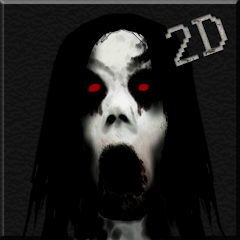
The game opens with a dark hallway. No tutorial. No explanation of who you are or why you are here. The character, Alexander, stands at the entrance of an abandoned house. Two arrows sit at the bottom of the screen. Left and right. That is all the control you get. No jump button. No run button. Just left and right. The first room is empty. A door on the right leads to the next area. You tap the right arrow and Alexander shuffles across the screen. The movement is slow. Deliberate. Each step feels heavy. The house is quiet. Too quiet. A single light bulb flickers overhead. The walls are covered in peeling wallpaper. The floorboards creak underfoot. You open the first door and step into a narrow corridor. Slendrina appears at the far end. She stands still. Her head tilted. Her eyes glowing. She does not move. She just watches. You freeze. The game does not tell you what to do. You learn quickly that if you move toward her, she disappears. If you move away, she follows. The chase is slow but relentless. You cannot outrun her. You can only hide. This is the core tension of Slendrina 2D. The game is not about fighting. It is about surviving through careful movement and puzzle-solving.
The house is a labyrinth. Each room connects to another. Some doors are locked. Some require keys. Some require code fragments. The puzzles are not difficult. They are logical. A code is written on a piece of paper, torn into four parts. You find each part in different rooms. You piece them together in your head. The game does not hold your hand. It does not highlight objects. You must tap everything. A bookshelf might hide a key. A drawer might contain a note. A skeleton might be holding a sledgehammer. The sledgehammer is not for combat. It is for breaking open a blocked exit. This is the game's design philosophy. Every object has a purpose. Every room has a clue. The game locks off previous areas once you have found what you need. This prevents unnecessary backtracking. The pacing is tight. You are always moving forward. The game respects your time. It is short. Most players finish in under thirty minutes. But those thirty minutes are dense. Every second matters.
The three lives and the three difficulties
The game has three difficulty levels: Easy, Medium, and Hard. The difference is not in puzzle complexity or enemy placement. It is in damage. On Easy, Slendrina takes one heart per hit. On Medium, she takes two. On Hard, she takes three. You start with three lives. Each hit reduces your health. When you reach zero, you die. The screen goes black. You restart from the last checkpoint. The checkpoints are generous. You rarely lose more than a few minutes of progress. But the tension remains. Each hit is a reminder that you are vulnerable. The game does not give you weapons. You cannot fight back. The only defense is avoidance. This creates a specific gameplay loop: explore, find clues, solve puzzles, avoid Slendrina. The loop is simple but effective. The three-lives system adds stakes without being punishing. On Hard mode, one mistake can cost you two hearts. Two mistakes and you are dead. This forces you to be more cautious. You move slower. You check corners. You listen for footsteps. The game becomes a stealth experience rather than a puzzle game. The original analysis here is the interaction between the difficulty levels and the lives system. Hard mode does not make the puzzles harder. It makes survival harder. This changes the player's behavior. On Easy, you rush through rooms. On Hard, you creep through them. The game does not explain this. You discover it through play. This is a smart design choice. It adds replayability without changing the core content. A player who beats the game on Easy can replay on Hard for a completely different experience.
The three-lives system also affects how you approach puzzles. On Easy, you can afford to take risks. You can walk into a room without checking for Slendrina. On Hard, you cannot. You must plan your route. You must know where Slendrina spawns. You must time your movements. The game does not have a map. You must memorize the layout. This is a barrier for some players. Casual players find it frustrating. Hardcore players find it rewarding. The game's design caters to both. Easy mode is for the story. Hard mode is for the challenge. The game's length is short enough that replaying on Hard does not feel like a chore. It feels like a new game. The ending is the same regardless of difficulty. Alexander finds Alicia. They escape together. The house collapses behind them. The credits roll. The journey is what matters, not the destination.
Bugs, glitches, and the update cycle
The game is not without issues. Players have reported several bugs. The most common is character freezing. Alexander stops moving. The controls become unresponsive. You cannot walk left or right. The only fix is restarting the game. This happens randomly. It is not tied to a specific room or action. The developer has not fully addressed this. Another bug involves the pause button. In recent updates, the pause button does not work. You cannot pause the game. This is a problem for a game that requires careful timing. If you need to step away, you cannot. You must leave the game running or quit entirely. The end screen also has issues. When you win or lose, the game sometimes gets stuck. You are not brought back to the main menu. You must force-close the app. These bugs are not game-breaking. They are inconvenient. They detract from the experience. The developer, DVloper, is aware of them. The update cycle is slow. The latest version, 1.2.9, was released in June 2026. The changelog is brief: "Fixed a policy compliance issue." No mention of bug fixes. This is a pattern with DVloper games. The updates focus on compliance rather than quality-of-life improvements. Players have noticed. The reviews reflect this frustration. One user wrote: "The game is really good, but there is a small glitch. I'm not sure if it's only on hard mode, but sometimes when I exit a room Slendrina is right outside the door, and since it's hard mode it results in an instant death." Another user reported: "When I am playing the game sometimes my character can't move and I even try to use other buttons it won't work." These are real issues. They are not isolated. They affect the gameplay experience.
The game's performance is generally stable. The frame rate is consistent. The graphics are simple but effective. The pixelated textures give the game a grungy, retro feel. The sound design is the game's strongest element. The ambient noise is unsettling. The footsteps echo. The doors creak. Slendrina's appearance is accompanied by a sharp musical sting. The audio cues are essential. They warn you of danger. They tell you when Slendrina is near. The game does not have voice acting. The dialogue is text-based. The story is minimal. You learn about Alexander and Alicia through notes and environmental storytelling. The game's lore is connected to the larger Slendrina universe. Slendrina is the granddaughter of Granny. She is part of a larger horror franchise. Fans of the series appreciate the connections. New players may not notice them. The game stands on its own. It does not require prior knowledge. It is a self-contained experience. The game's simplicity is its strength. It is easy to pick up. It is hard to master. It is a game that knows what it is and does not try to be more.
The 67.8 MB XAPK and the arm64-v8a architecture
The latest Android version, 1.2.9, is distributed as an XAPK file. This is a bundle that contains the base APK and additional resources, such as OBB files. The file size is 67.8 MB. The base APK alone is smaller. The XAPK is required for the full game. The installation process is more complex than a standard APK. You must use an XAPK installer. Most users are familiar with this process. It is common for games with large assets. The minimum Android version is 7.0 (Nougat, API 24). The architecture is arm64-v8a. This is the standard 64-bit architecture for modern Android devices. Older devices are not supported. The game also requires at least 1GB of RAM. The storage requirement is 67.8 MB for the XAPK. The installed game takes up more space. The total is around 120 MB. This is modest by modern standards. The game's assets are lightweight. The textures are low-resolution. The sound files are compressed. The game does not require high-end hardware. It runs on budget devices. The iOS version requires iOS 13.0 or later. The file size is 145.4 MB. This is larger than the Android version. The difference is due to Apple's packaging requirements. The game is also available on PS Vita. A fan port was released in 2024. The Vita version is based on Android 1.2.1. It includes a transparency fix. The port is unofficial. It is not supported by DVloper. It is a testament to the game's popularity. Fans are willing to port it to other platforms. The game has a dedicated following. It is not a blockbuster. It is a cult classic.
Screenshots


Get File
App Specifications
| Latest Version | 1.2.9 |
| Uploaded by | DVloper |
| Requires Android | Android 7.0+ |
| Category | Adventure |
| Content Rating | Rated for 16+ |
Technical Details
| Package Name | com.dvloper.slendrina2d |
| Languages | English |
| Architecture | arm64-v8a |
| Signature | dc738f07f2cc11c63feb8ef4043aa7f47e901274f8b717033263e661809256b8 |
Security & Additional Info
| Scan Result | Secure |
| Package Name | com.dvloper.slendrina2d |
| SHA‑256 | dc738f07f2cc11c63feb8ef4043aa7f47e901274f8b717033263e661809256b8 |
| SHA‑1 | b2772a2cffff9a32467b28a8c99837c25341336b |
| App Permissions | 0 |