About Solitaire Story

Playing a hand and seeing what happens next
The solitaire table loads. Cards spread out in the classic pyramid or Klondike layout, depending on which mode you picked. You tap a card, then another. The game responds instantly — no loading spinner, no connection required. The screen stays crisp, the card faces clear. You win the hand. A short animation plays. Then the ad loads. Every single hand, without exception, triggers a video ad that runs anywhere from fifteen to forty-five seconds. That is the rhythm of Solitaire Story. Play a hand, win or lose, watch an ad. The game itself runs smoothly offline, but the ad frequency is baked into the structure from the very first level. What keeps players tapping is not the ads but the story that sits behind them — a rescue narrative that unfolds one hand at a time.
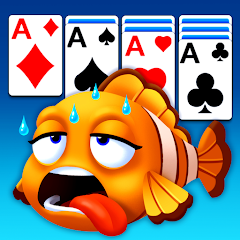
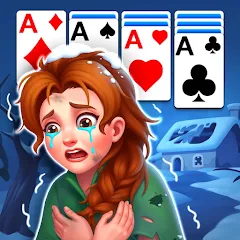
The core loop is simple. You play solitaire, you win cards, you advance the story. Each chapter presents a new rescue scenario: a struggling family, a heartbroken woman, a lonely tiger, a thirsty fish, endangered animals that need saving. The game frames every hand as a contribution to these missions. Win enough hands, and the story progresses. The solitaire mechanics are standard — arrange cards in sequence from Ace to King across four foundation piles, with the option to flip one card or three cards at a time. The unlimited undo button sits at the bottom, letting you reverse moves without penalty. This combination — standard solitaire plus a narrative wrapper — is what distinguishes Solitaire Story from a plain card game. The story gives each hand a purpose beyond clearing the table.
The undo button changes how you play
Most solitaire games penalize mistakes. You misplace a card, you lose the hand, you start over. Solitaire Story takes a different approach. The unlimited free undo lets you experiment with moves that you would normally avoid. You can try a risky sequence, see where it leads, and reverse it if it fails. This changes the difficulty curve significantly. A hand that would be lost in a traditional solitaire game becomes winnable through trial and error. The 1-card and 3-card flip modes interact with this undo mechanic in distinct ways. In 1-card mode, the undo is almost like a save-state — you can backtrack through every move and find the optimal path. In 3-card mode, the undo becomes a strategic tool because each flip reveals three cards at once, and reversing a flip resets the entire set. Players who master the 3-card mode with the undo button can clear hands that would otherwise be unwinnable. This interaction is not described on the Play Store page. The page lists both features separately, but it does not explain how they work together. In practice, the undo transforms the 3-card mode from a luck-based challenge into a puzzle that rewards patience and experimentation.
Competitors like Solitaire Home Story and Tiki Solitaire TriPeaks offer similar gameplay but without the same undo freedom. In those games, mistakes cost you lives or force you to watch an ad to continue. Solitaire Story gives you the undo for free, no ads required to reverse a move. The ads come after the hand ends, not during play. This is a meaningful difference. The game does not interrupt your thinking. It interrupts your victory. You complete a hand, you feel the satisfaction of solving the puzzle, and then the ad appears. The interruption is predictable and consistent, which makes it easier to tolerate than random ad pop-ups during gameplay.
What the changelog actually says versus what happens
The official update notes from August 2026 mention a summer theme story pass event and new theme options. No mention of ad frequency changes. No mention of bug fixes or performance improvements. The developer has been consistent in this pattern across multiple updates — each changelog lists a new event or theme, but never addresses the core complaints that appear in user reviews. The most recent version, as of mid-2026, continues to show the same ad behavior reported by players in 2025. The event system adds seasonal content, but the underlying mechanics remain unchanged. Players who hoped updates would reduce the ad load have been disappointed. The game's version history shows a steady stream of new themes and events, but the fundamental experience — play a hand, watch an ad — has not shifted since launch.
Some users have found a workaround. Backing out of the game and reopening it sometimes skips the ad that would have played after a hand. This is not a feature. It is a bug that players exploit. The game reloads, and the ad trigger resets. But this only works occasionally, and it adds friction to what should be a smooth experience. The more reliable approach is to play in short bursts — a few hands at a time, then close the app before the ad cycle becomes exhausting. This pattern appears in user discussions across multiple platforms. Players describe playing until the ads become unbearable, then taking a break. The game's offline capability means you can play anywhere, but the ad load means you rarely play for extended periods.
The coin system and what it actually buys
Coins accumulate after every hand. The game gives you a small number of coins as a reward, and you can watch additional ads voluntarily to earn more. The store offers various bundles — spatulas, mine treasures, and other themed items — with prices ranging from under a dollar to around ten dollars. These purchases remove ads temporarily or permanently, depending on the bundle. The $5 option appears repeatedly in user reviews as the threshold that makes the game enjoyable. Players who pay that amount report that the game becomes "totally addictive" and "relaxing." Without that payment, the ad frequency remains high enough that many users uninstall after a few days. The coins themselves have no clear function beyond purchasing these bundles. Some players have asked what the coins are for, noting that they accumulate with no obvious way to spend them. The game's economy is straightforward: play for free with ads, or pay to remove them. There is no middle ground. The progression system, which requires stars to advance through chapters, does not use coins. The story unlocks based on hands won, not coins spent. This creates a disconnect between the currency you earn and the progress you make.
The rescue missions continue regardless of whether you pay. The story episodes — from the struggling family to the endangered animals — are available to all players. The game does not gate content behind purchases. It gates convenience behind purchases. This is an important distinction. A free player can complete every chapter. They will just watch an ad after every hand to do it. The paid player skips the ads and moves through the story faster. The version history shows that the developer has added new themes and events regularly, but the core ad-supported model has remained constant since the app's global release in March 2024.
Screenshots


Get File
App Specifications
| Latest Version | 3.34.2 |
| Uploaded by | Solitaire Card Games Classic |
| Requires Android | Android 6.0+ |
| Category | Card |
| Content Rating | Rated for 3+ |
Technical Details
| Package Name | linkdesks.solitaire.rescue.story |
| Languages | English |
| Architecture | arm64-v8a |
| Signature | 51da5e1949544aeb97434fbb83327ae680559d03bf3d5d48155f01879002338b |
Security & Additional Info
| Scan Result | Secure |
| Package Name | linkdesks.solitaire.rescue.story |
| SHA‑256 | 51da5e1949544aeb97434fbb83327ae680559d03bf3d5d48155f01879002338b |
| SHA‑1 | aa14ab9bab9bf58978bfc601e8e419e08a35ed43 |
| App Permissions | 0 |