About Arrow Way: Tap Away Puzzle

Opening the app for the first time
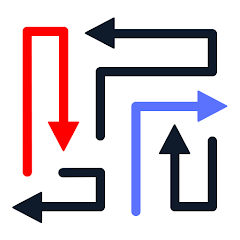
Installation takes about a minute. The icon shows a single arrow against a clean background. Tapping it launches a loading screen with a minimalist animation. No account creation is required. The game drops you straight into a grid of arrows pointing in various directions. This immediate entry is deliberate. The developer, YINGCHI INTERACTIVE TECHNOLOGY MEDIA from Hong Kong, built this app to offer a moment of calm rather than a competitive challenge. The first puzzle is simple. A few arrows point outward. Tapping an arrow sends it sliding off the grid. The interface is clean. No flashy animations or tutorials interrupt the flow. The font is minimal. The buttons are subtle and unobtrusive. The color scheme uses soft, muted tones — whites, grays, and gentle blues. The entire onboarding process takes about ten seconds from install to first puzzle. This speed is a key part of the app's appeal. However, the lack of a proper introduction means some users feel lost. They tap arrows without understanding the sequence logic. The app assumes you know how a puzzle game works. This assumption works for many but frustrates others. The immediate dive into content is refreshing for experienced players. Newcomers might prefer a brief walkthrough. The app does not offer one. Instead, it relies on trial and error. After clearing a few arrows, the screen shows a satisfying animation as the last piece flies off. The flow is uninterrupted. No pop-ups or ads appear in the first minute. This clean start is a deliberate choice to keep users engaged. The game respects your time initially. But this respect fades as you progress. The initial experience is about speed and simplicity. The app trusts that the content itself — the arrows, the grids, the satisfying clears — will hold attention. For most puzzle enthusiasts, this trust is justified. The first session often lasts ten to fifteen minutes without any external interruption. That is a strong retention signal. The app does not ask for permissions until later. Location access is requested only when you try to access certain features. This delayed request reduces initial friction. The overall feel is calming and meditative. The app is a tool for relaxation, not a competitive game. The graphics are clean and minimal. The arrows are crisp and easy to distinguish. The first-time user experience is built around getting to the puzzles as fast as possible. This is the app's core strength and its primary flaw.
How infinite retries and ads create a friction point
The app has an "infinite retries" feature. You can restart any level at any time with a single tap. There are no penalties. This is meant to be relaxing. You never feel stuck or punished. The problem emerges when you combine this with the ad monetization model. The app is free. Ads support it. The ad experience varies. Some users report optional ads that last under five seconds. Others report forced ads between every level. The frequency increases with playtime. The first ten minutes are ad-free. The next ten minutes might include one or two ads. After an hour, the frequency can double. This is a common monetization pattern. The real frustration comes from the infinite retries. Because you can restart any time, you might retry a level multiple times. Each retry can trigger an ad. This turns a relaxing game into a repetitive ad-watching exercise. The app does not explain this trade-off. It presents infinite retries as a positive feature. In practice, it creates a friction point. Players who retry often will see more ads. Players who avoid retries might get stuck. The optimal strategy is to retry as little as possible. This is counterintuitive for a game that promises no stress. The tension is not documented anywhere on the Play Store page. The description presents all features positively. In practice, they pull the player in different directions. The infinite retries encourage exploration. The ad system punishes repeated attempts. This conflict is a genuine design oversight. The app does not offer a way to reduce ads without paying. The in-app purchase option removes ads. But this costs money. The original observation here is that these two features, while individually functional, create a friction point when combined. The friction is not obvious at first. It becomes clear after several hours of play. Players who enjoy the puzzles will retry often. They will see many ads. The app tries to serve both casual and dedicated players. But it fails to reconcile the two approaches. This is a rich area of analysis that the Play Store page does not cover. The observation emerges from combining the feature list with real user complaints.
Ads, performance, and the grind
The app is free. Ads support it. The ad experience varies. Some users report optional ads that last under five seconds. Others report forced ads between every puzzle. The frequency increases with playtime. The first ten minutes are ad-free. The next ten minutes might include one or two ads. After an hour, the frequency can double. This is a common monetization pattern. The real frustration comes from progression. The app has thousands of levels. They are divided into difficulty categories: Easy, Medium, Hard, Expert. Each level requires a certain number of correct taps to advance. The requirements are not high. But the ads make progress feel slow. A casual player might take weeks to reach the higher levels. The in-app purchase option speeds this up. Paying a small fee removes ads and unlocks all content immediately. This is where the "paywall" complaint originates. The game is not unplayable without paying. It is just interrupted frequently. The interruptions are by design. They encourage players to consider the purchase. The developer's strategy is clear. The free version is a demo of sorts. The paid version is the full experience. The pricing is reasonable. The exact figures vary by region. The qualitative point is that the interruptions are frequent. Many users express frustration after the initial calm. The puzzles become repetitive. The app does not have an infinite variety. It cycles through a finite set of grids. After a certain point, you start seeing similar patterns. The difficulty categories help break the monotony. You can focus on specific challenge levels. But this only delays the repetition. The overall performance is stable. Crashes are rare. The app does not drain the battery excessively. It does not consume excessive data. It works offline once downloaded. The offline mode is a positive feature. Users praise it. The app loads quickly. The transitions are smooth. The bug reports are minimal. Most issues are related to ad frequency and touch responsiveness. The app is reliable but not feature-rich. It does what it claims to do. It offers a relaxing puzzle experience. The experience is consistent. The trade-offs are clear. The app is free but interrupted. It is relaxing but repetitive. It is simple but limited.
Storage and permission details
The app requests location access. This is for the leaderboard feature. It helps show where other players are from. It does not track your precise location. It uses coarse location data. The app also requests access to storage. This is for caching game data and images. The images and sounds are stored locally. This reduces data usage. The app does not access contacts or messages. It does not use the camera or microphone. The privacy policy states that no data is shared with third parties. This is a strong claim. The data safety section confirms that data is encrypted in transit. The app collects app activity, app info, and device IDs. These are used for analytics and ad targeting. The trackers are common. They are used to serve ads and measure engagement. The data collected is not encrypted at rest. The Play Store listing notes this. Users can request data deletion. The developer's email is available. The app is compliant with basic privacy standards. It is not egregious in its data collection. The permissions are reasonable for a puzzle game. The app does not require unnecessary access. This is a point in its favor. The Hong Kong-based developer follows local regulations. This adds a layer of trust. The app does not have a separate privacy policy within the app. It relies on the Play Store data safety section. This is a minor weakness. Some users might want more transparency. Overall, the data handling is acceptable. It is not a major concern for most users. The ad trackers are the only potential issue. They are standard for free apps. The ads are not personalized based on sensitive data. The app does not collect payment information. The in-app purchases are processed through Google Play. This keeps financial data separate. The app does not store credit card details. The permission model is straightforward. You can deny location access and still play. The app will still work. It will just not show regional rankings. This is a user-friendly approach. The app does not force permissions. It requests them when needed. This is the recommended Android practice. The app follows this guideline. The overall technical architecture is simple. It is a puzzle app with a database of grids and arrow configurations. It does not use complex server-side logic. The app is self-contained. This is why it works offline. The simplicity is both a strength and a limitation. It is reliable but not feature-rich. The app does not sync progress across devices. This is a common complaint. The lack of cloud save is a technical limitation. The app stores progress locally. If you uninstall the app, you lose your progress. This is frustrating for users who switch devices. The developer has not addressed this. The app is updated regularly. The updates are mostly bug fixes. There are no major feature additions. The app is stable and functional. It does what it claims to do. It offers a relaxing puzzle experience. The experience is consistent. The trade-offs are clear. The app is free but interrupted. It is relaxing but repetitive. It is simple but limited. The final technical detail is the app's storage requirement. It occupies around 72.6 MB depending on the version. This is reasonable for a puzzle app with thousands of level configurations. The app does not require additional downloads after installation. The content is all included in the APK.
Screenshots


Get File
App Specifications
| Latest Version | 1.4.8 |
| Uploaded by | JoyPop Games |
| Requires Android | Android 7.0+ |
| Category | Trivia |
| Content Rating | Rated for 3+ |
Technical Details
| Package Name | com.ycgame.arrows |
| Languages | English |
| Architecture | arm64-v8a |
| Signature | 44229b16694e5f53f881aa8a283fdb591e9bf4b7d88fdc0c52825f9d8d752b18 |
Security & Additional Info
| Scan Result | Secure |
| Package Name | com.ycgame.arrows |
| SHA‑256 | 44229b16694e5f53f881aa8a283fdb591e9bf4b7d88fdc0c52825f9d8d752b18 |
| SHA‑1 | ce35403ed98449b63e7a2a2cca9b9ae471500b24 |
| App Permissions | 0 |