About Project Jazzgame

The moment you open Project Jazzgame
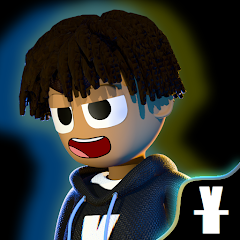
You hit install, wait for the download to finish, and tap the icon. The screen loads into a cityscape. No tutorial pops up. No hand-holding. The character stands on a rooftop, and the game expects you to figure it out. That is the first real test. Sprint forward, and the character vaults over a low wall. Tap the jump button at the right time, and they grab a ledge. Miss it, and they fall. The fall triggers a ragdoll effect. The body tumbles down, hits the ground, and bounces. It looks funny the first time. It looks less funny the tenth time.
The city feels open from the start. You can run in any direction. Rooftops connect through gaps, ledges, and pipes. The parkour system responds to your inputs with a delay that feels intentional. You cannot cancel a move mid-air. Once you commit to a vault or a jump, the animation plays out. This creates a rhythm. You learn to plan two or three moves ahead. A wall run into a side flip. A slide under a pipe into a sprint. The flow breaks when you hit a dead end. Then you turn around and try a different route.
Below the rooftops, the streets hold enemies. Rival gangs patrol in small groups. They do not attack on sight. They react when you get close. The combat system ties directly to your movement speed. A running punch does more damage than a standing one. A slide kick knocks enemies off balance. A finisher triggers when you land a combo. The camera zooms in. The character performs a cinematic takedown. The ragdoll physics take over after the hit. The enemy flies back, hits a wall, and crumples. The whole thing takes about two seconds. Then the next enemy moves in.
How parkour feeds into combat and back again
The game does not separate movement from fighting. They exist in the same system. You sprint toward an enemy, jump at the last second, and press the attack button. The character performs a flying kick. If it connects, the enemy staggers. You land, roll, and continue running. You can chain this into a wall run, jump off the wall, and deliver a downward punch. The game registers each action as part of a combo. The combo counter stays active as long as you keep moving and hitting. Stop for more than a second, and the counter resets.
This creates a specific playstyle. You cannot stand in one place and fight effectively. The enemies will surround you. They attack from different angles. The only way to survive is to keep moving. Use the environment. Vault over a car to avoid a punch. Run up a wall to escape a grapple. Drop down from a ledge to perform a ground slam. The game rewards creativity. A player who masters the parkour system can defeat groups of enemies without taking a hit. A player who focuses only on combat will struggle. The system forces you to learn both.
The ragdoll physics add unpredictability. When you hit an enemy, they do not always react the same way. Sometimes they stumble back. Sometimes they fall forward. Sometimes they get stuck on geometry. This can work in your favor. An enemy stuck on a railing cannot attack you. It can also work against you. A body that falls the wrong way can block your path. You have to jump over it or go around. The physics are not polished. They are chaotic. That chaos is part of the appeal. Every fight feels different because the physics never produce the exact same result twice.
The version history and what actually changed
The game has gone through several updates since its release. The Play Store lists the latest changelog as "Scoring UI Display Mode Bug Fixes." That is the official line. Other sources provide more detail. Version 0.0.495 added a new lunge attack and new vault attacks. It also improved NPC parkour behavior. Version 0.0.497 fixed what players called the "Immortal Bob Bug." That bug made a specific enemy type unkillable. The same update fixed scoring text alignment issues and rebalanced sound effects. A stride bug fix also made it into that release.
Version 0.0.498 arrived on August 2, 2026. The official changelog says "Scoring UI Display Mode Bug Fixes." That is the only detail provided. Players have reported that this update also reduced some crash occurrences, but the developer did not confirm that. The patch notes from earlier versions show a pattern. The developer fixes specific, named bugs. They do not release vague "performance improvements" updates. Each patch targets a concrete issue. The NPC stuck bug. The immortal bob. The stride bug. This approach gives players confidence that reported problems get addressed.
The Android version launched on December 2, 2025. The PC version is still in development. It appears on Steam as "coming soon." The itch.io page offers a Windows build. That build includes features not yet in the Android version. Stealth mechanics. Dynamic environmental interactions. The Android version focuses on parkour and combat. The PC version seems to expand the scope. Whether those features will migrate to Android remains unclear. The developer has not announced a roadmap.
The real-world performance and what holds it back
The game runs on most modern Android devices. It does not require high-end hardware. The frame rate stays stable during parkour sequences. It drops during combat with multiple enemies. The drop is noticeable but not game-breaking. The real issue is the enemy spawn system. Players have reported that enemies do not always appear. You can run through an entire district and find no one to fight. The only fix is to restart the game. This forces you to reload the entire world. The process takes about thirty seconds. It breaks the flow.
Another issue is the map size. The city looks large, but the playable area is limited. You can reach the edges of the map quickly. The game does not block you. You just run into an invisible wall or an untextured void. The illusion of an open world shatters at that point. Players have asked for more maps. They want variety. The developer has not responded to these requests. The current map becomes repetitive after a few hours. You memorize the routes. You know where the enemies will spawn. The unpredictability fades.
The fighting system also draws complaints. The controls are responsive, but the moveset is shallow. You have a light attack, a heavy attack, a block, and a dodge. The parkour moves add variety, but the combat itself lacks depth. Players want to pick up objects and use them as weapons. They want more combo variations. The developer has not added these features. The game feels like a foundation. A solid one, but still a foundation. The potential is clear. The execution is incomplete.
What happens when you try to use parkour and combat together in a real fight
Take a specific scenario. Three enemies stand on a rooftop. You approach from the fire escape. You have two options. Drop down and fight them directly. Or use the environment to your advantage. The direct approach works, but you will take damage. The environmental approach requires more skill. Run along the edge of the roof. Jump onto a low wall. Use the wall to launch yourself into a flying kick. The kick hits the first enemy. He staggers backward. Before he recovers, you land and slide into the second enemy. The slide knocks him down. The third enemy attacks. You dodge, run up a nearby wall, flip backward, and land behind him. A single heavy attack finishes him. The first enemy is still recovering. You close the distance and perform a finisher. The fight ends in under ten seconds.
This scenario works because the systems interact. The parkour moves are not just for traversal. They are combat tools. The wall run becomes a setup for an aerial attack. The slide becomes a crowd-control move. The dodge is not just a defensive option. It repositions you for a counterattack. The game does not explain this. You have to discover it through trial and error. That discovery process is rewarding. Every new move you learn opens up new combat possibilities. The game respects your ability to experiment. It does not hold your hand. It also does not punish you for failing. You just respawn and try again.
The ragdoll physics add another layer. When you hit an enemy with a heavy attack, they fly backward. They might hit another enemy. That enemy might also fall. The chain reaction creates openings. You can use the chaos to your advantage. The physics are not consistent. Sometimes they work perfectly. Sometimes they produce bizarre results. An enemy might launch into the air for no reason. They might clip through a wall. These moments break immersion. They also create memorable moments. The game is not polished. It is experimental. That experiment is what makes it interesting.
Screenshots


Get File
App Specifications
| Latest Version | 0.0.498 |
| Uploaded by | VEETEE Games |
| Requires Android | Varies with device |
| Category | Adventure |
| Content Rating | Rated for 3+ |
Technical Details
| Package Name | com.VEETEEGames.JazzGame |
| Languages | English |
| Architecture | arm64-v8a |
| Signature | 967cb735022418b48d3fe15f2a19b5e05d1a68a83ab81e38e1c2352a9df1f07d |
Security & Additional Info
| Scan Result | Secure |
| Package Name | com.VEETEEGames.JazzGame |
| SHA‑256 | 967cb735022418b48d3fe15f2a19b5e05d1a68a83ab81e38e1c2352a9df1f07d |
| SHA‑1 | 61c62fac69d396eeb18f6f1f4391ec7ef78e5fa8 |
| App Permissions | 0 |